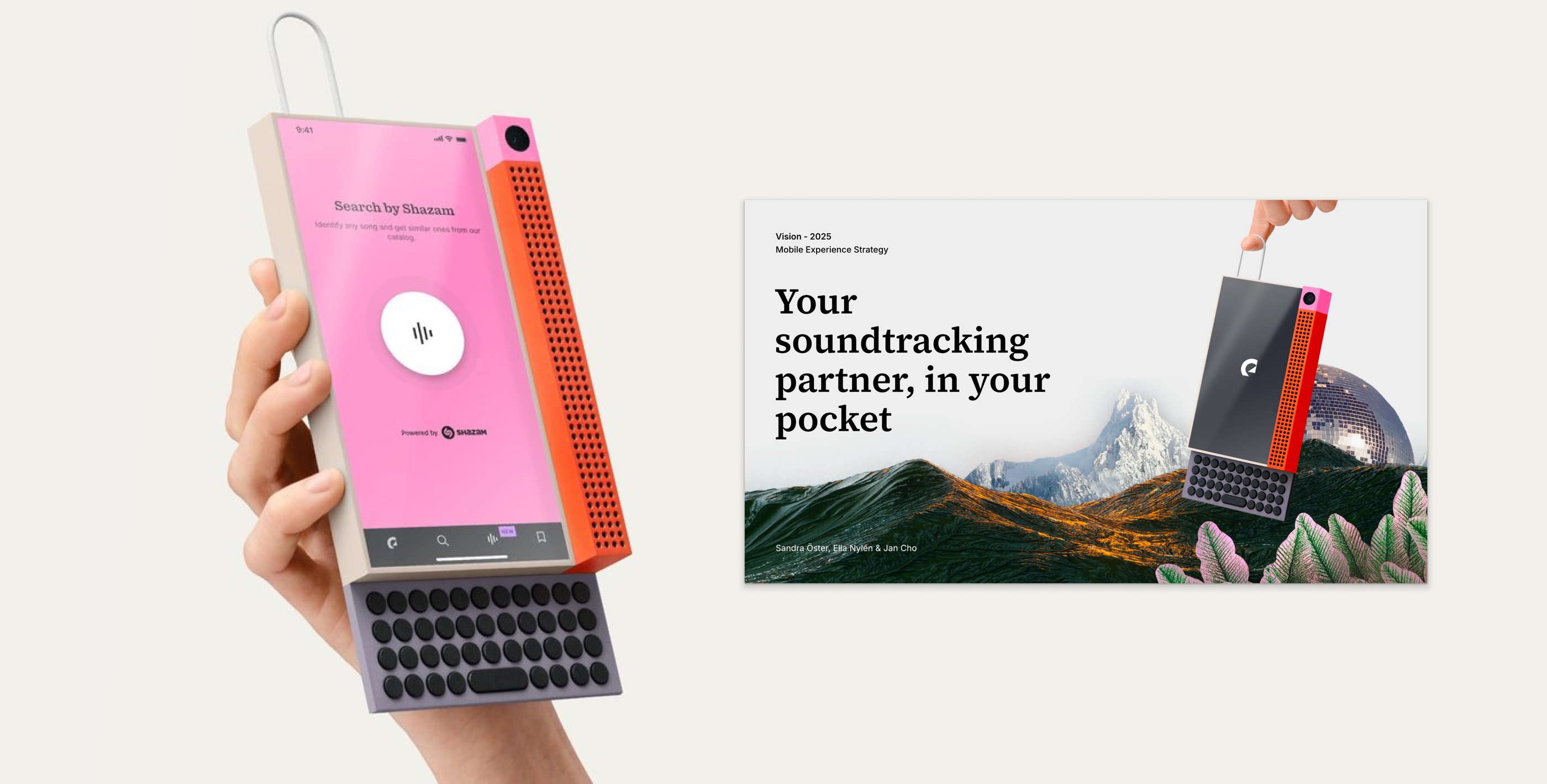
Existing users loved the app, but adoption had stagnated. We wanted to find out why: was it an awareness problem, an unclear purpose, or did the app just not fit into how creators actually worked? On top of that, we had no shared vision across the company, which made it hard to know where to focus.
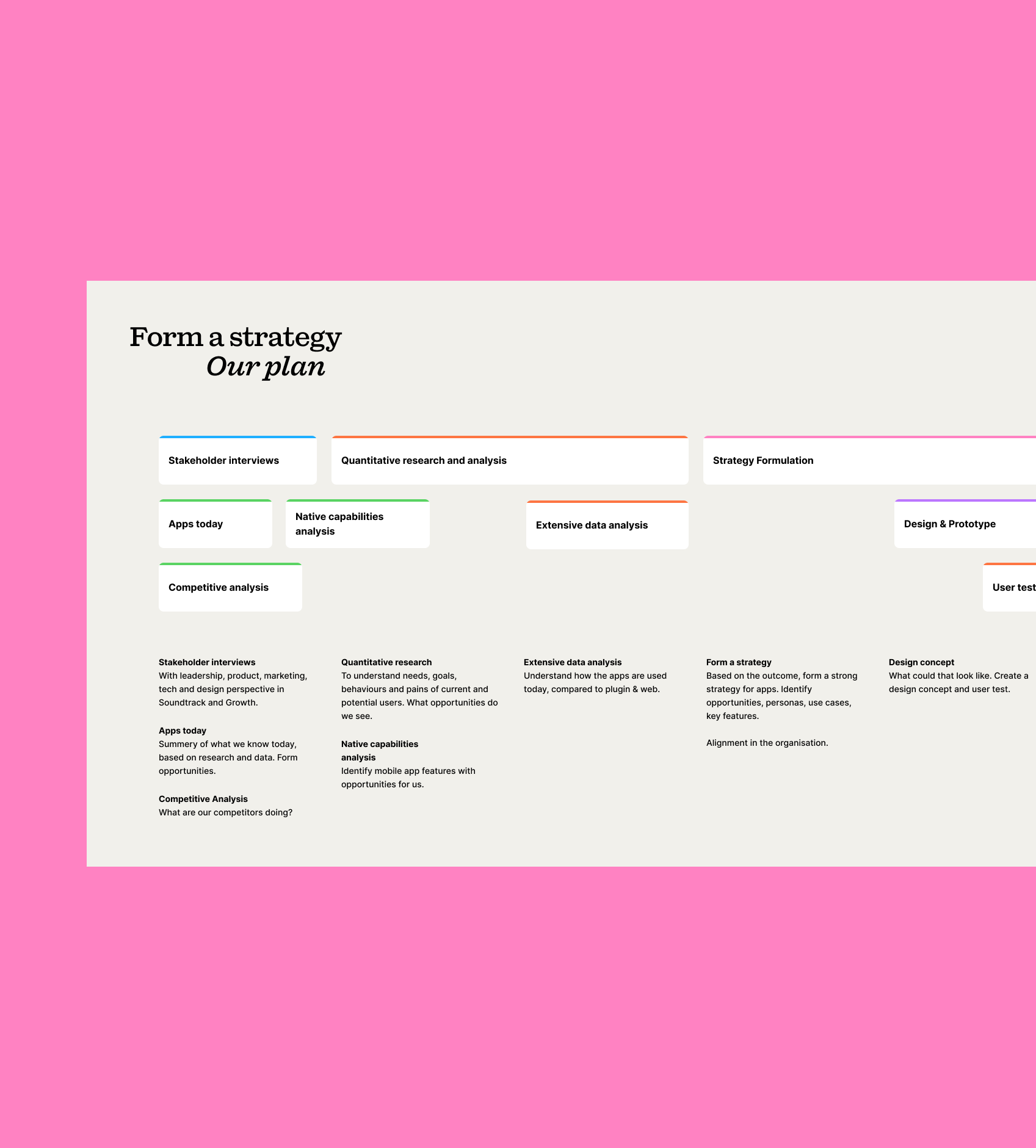
I shaped the questions worth answering and worked closely with product, research, and analytics, running user interviews, digging into the data, and conducting market research to find what was really holding the app back. Based on the learnings, I narrowed the focus and turned it into concrete concepts, all while keeping the company and stakeholders aligned through regular workshops and check-ins.
The work led to a research-backed strategy built around three pillars: mobile-unique value, integrated experiences, and app awareness. Those set the direction for what we built next, starting with a new mobile-specific feature, Search by Shazam.
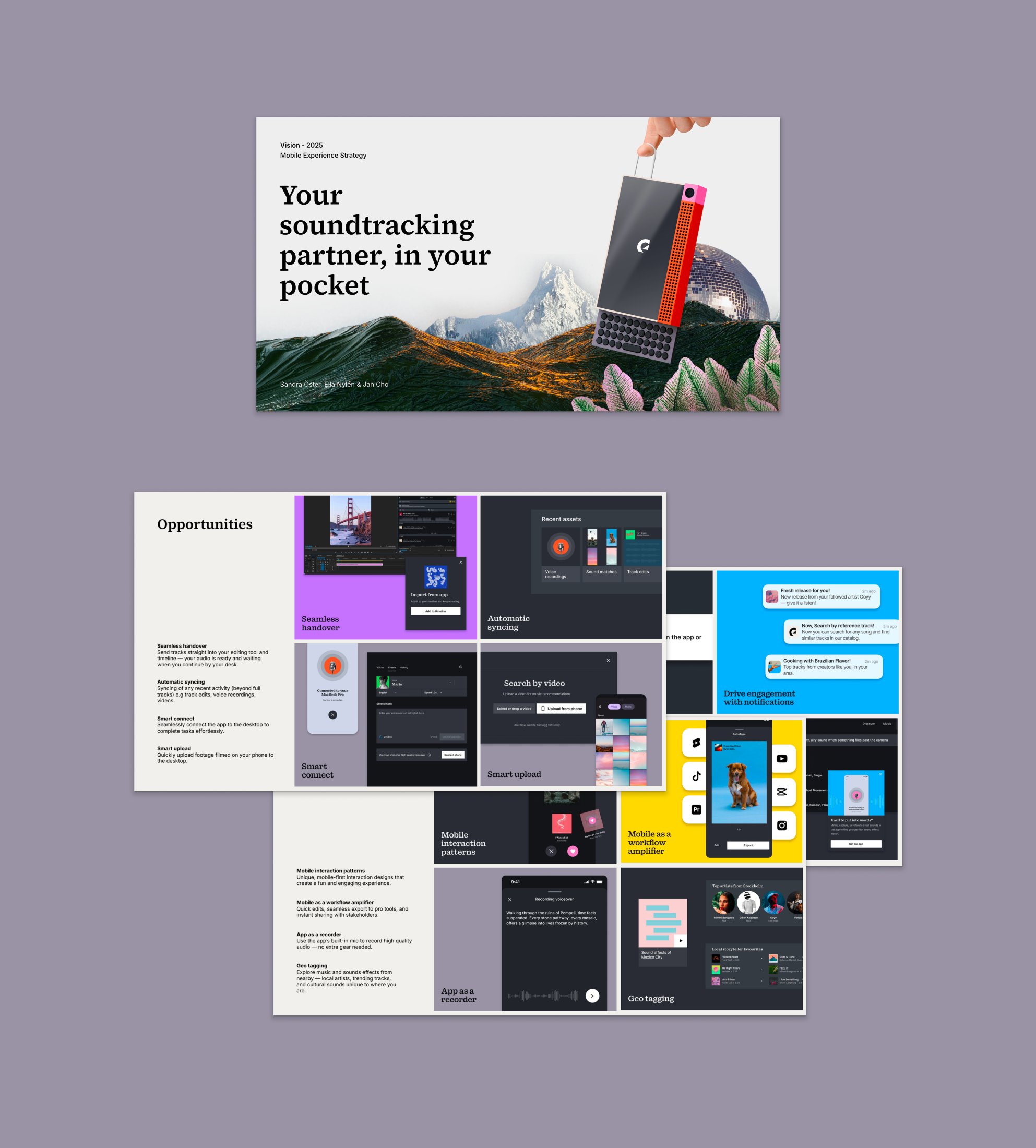
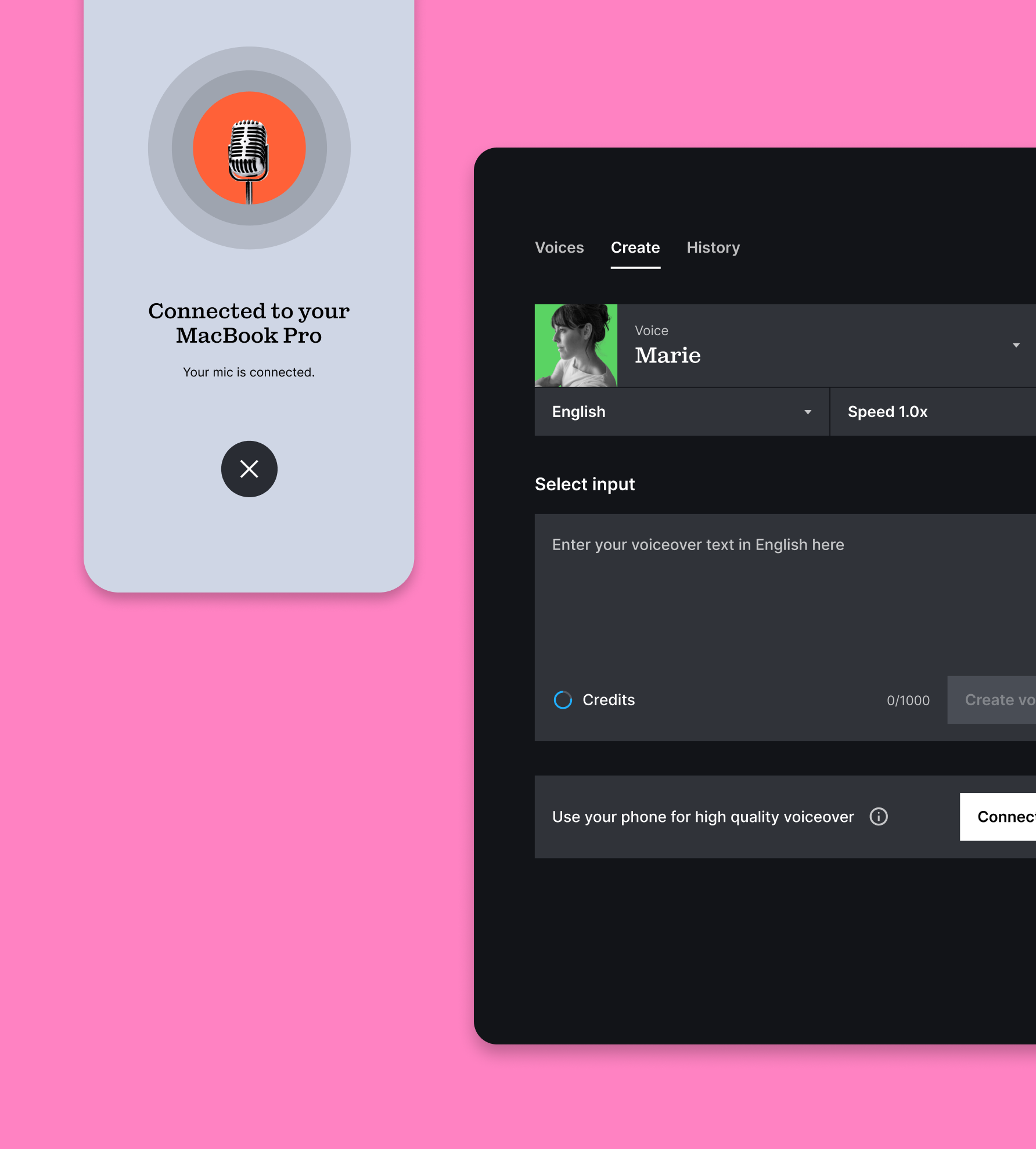
I created visual concepts for each direction to make the strategy tangible, giving stakeholders something concrete to react to.
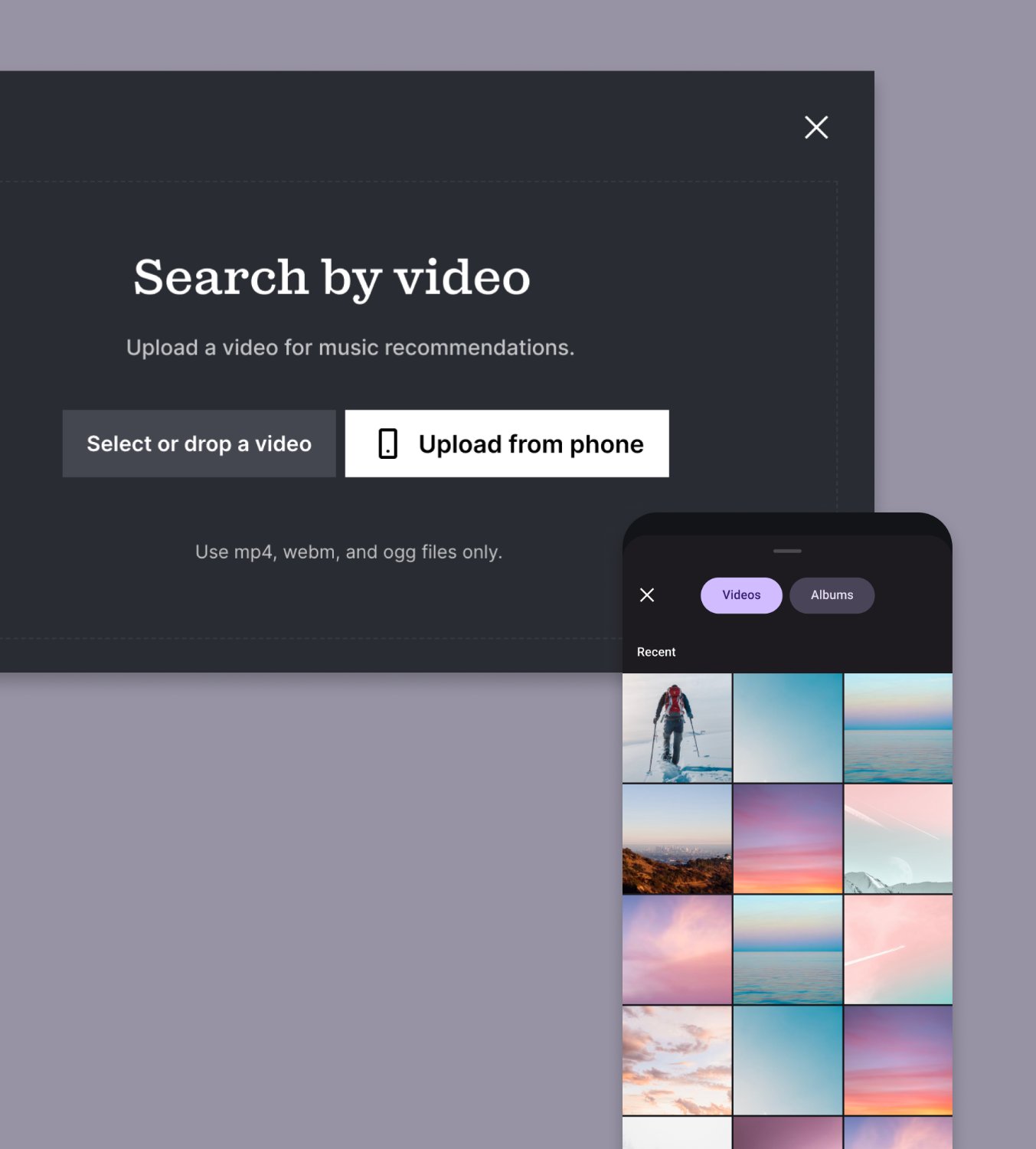
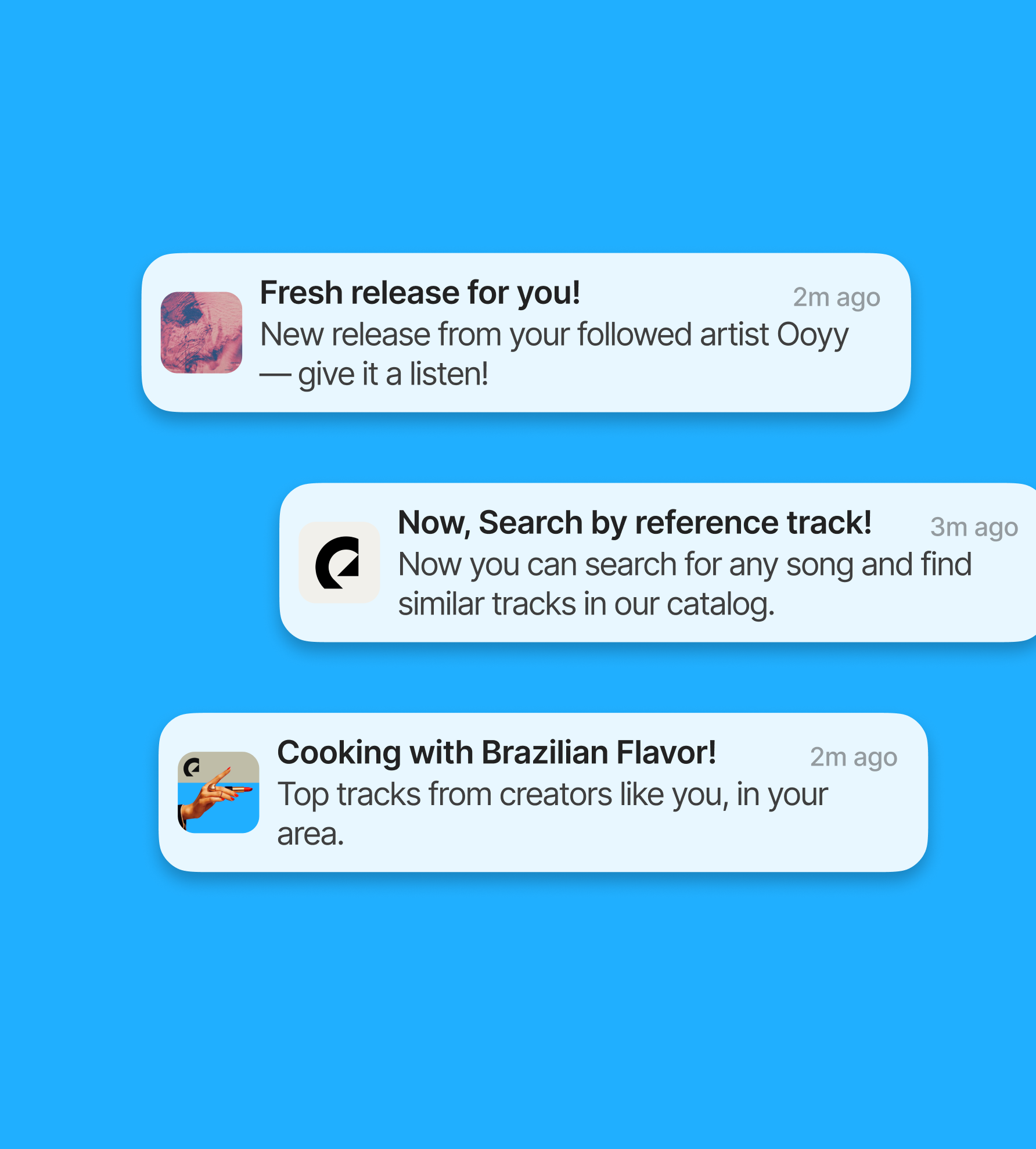
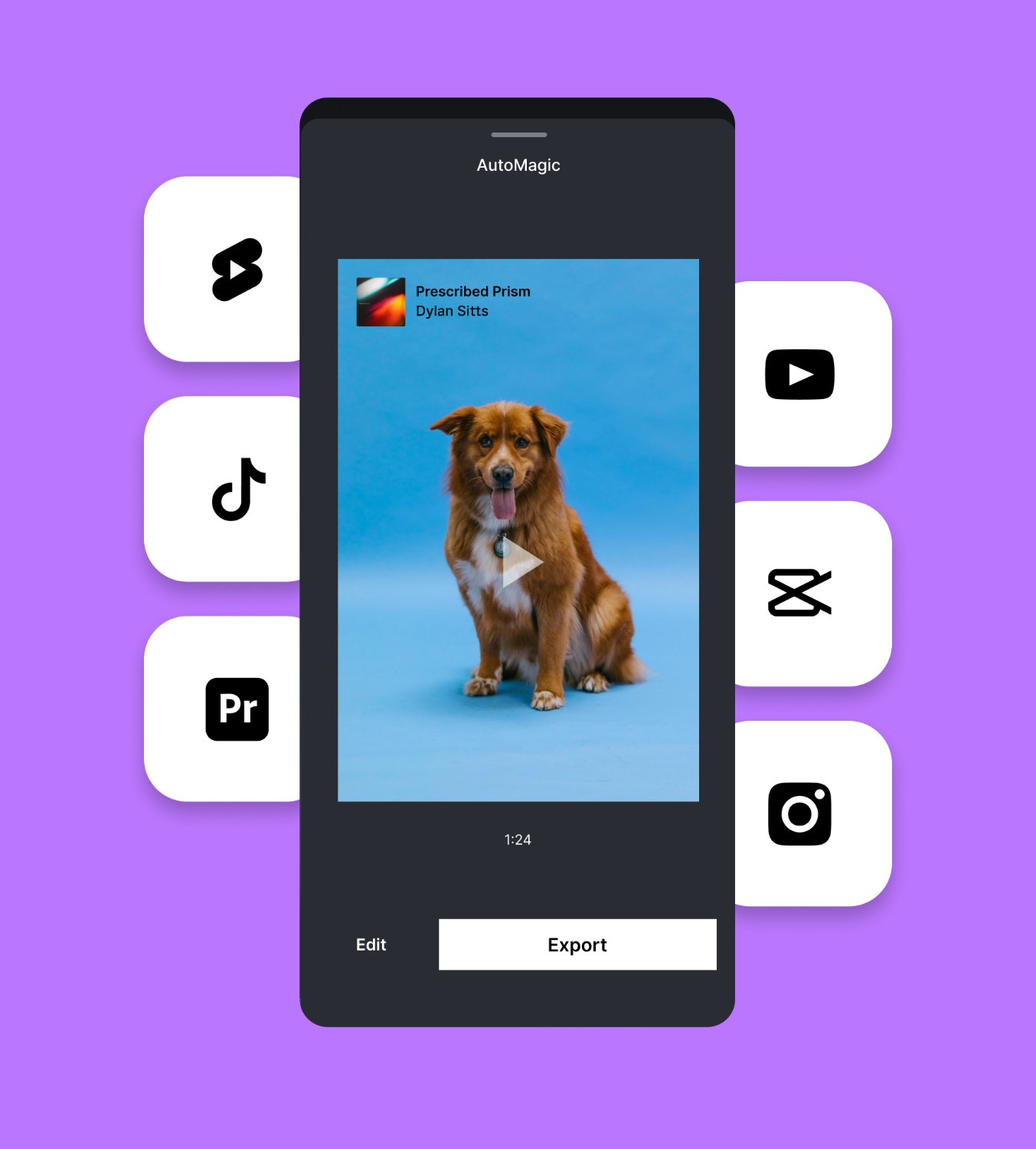
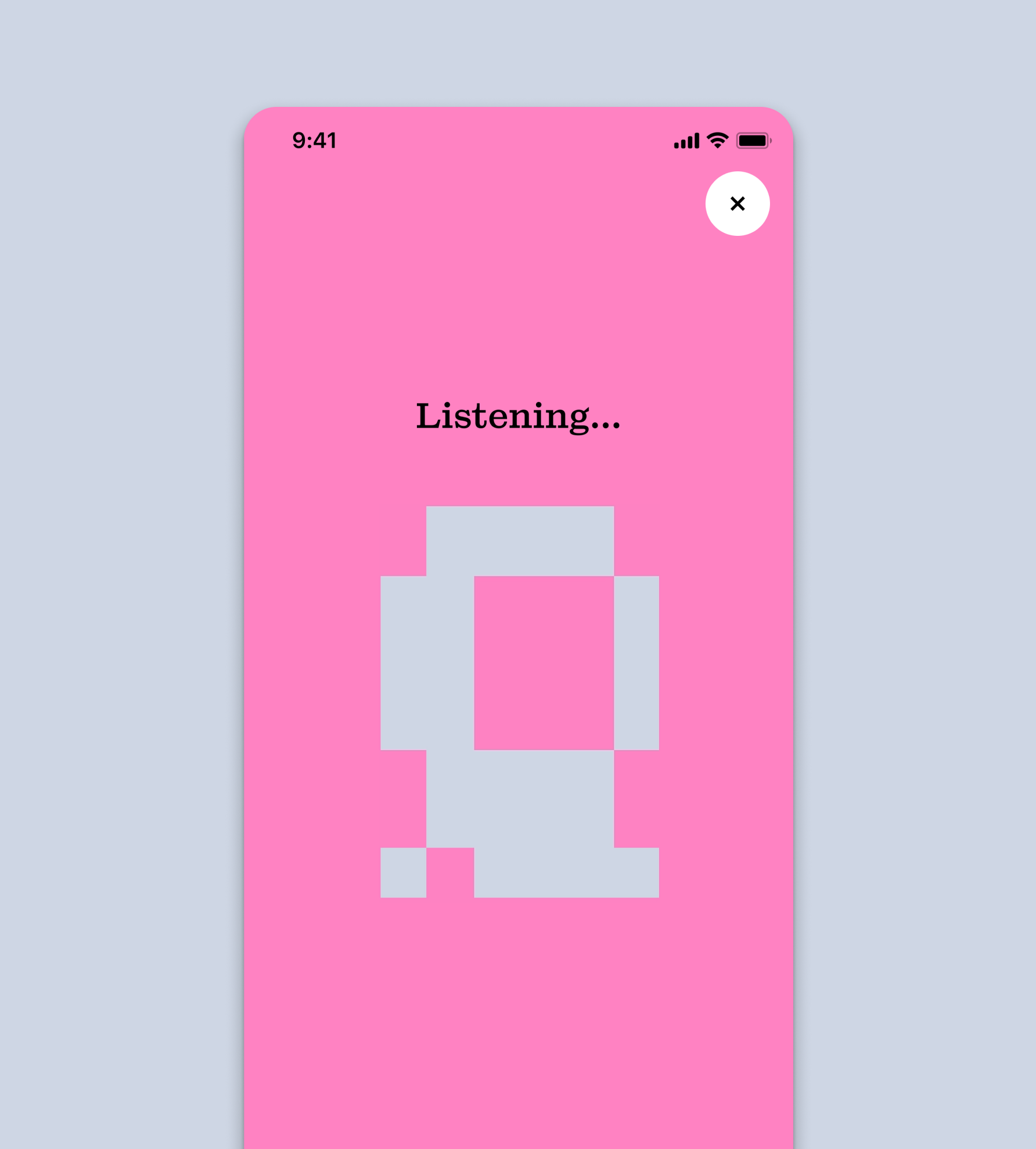
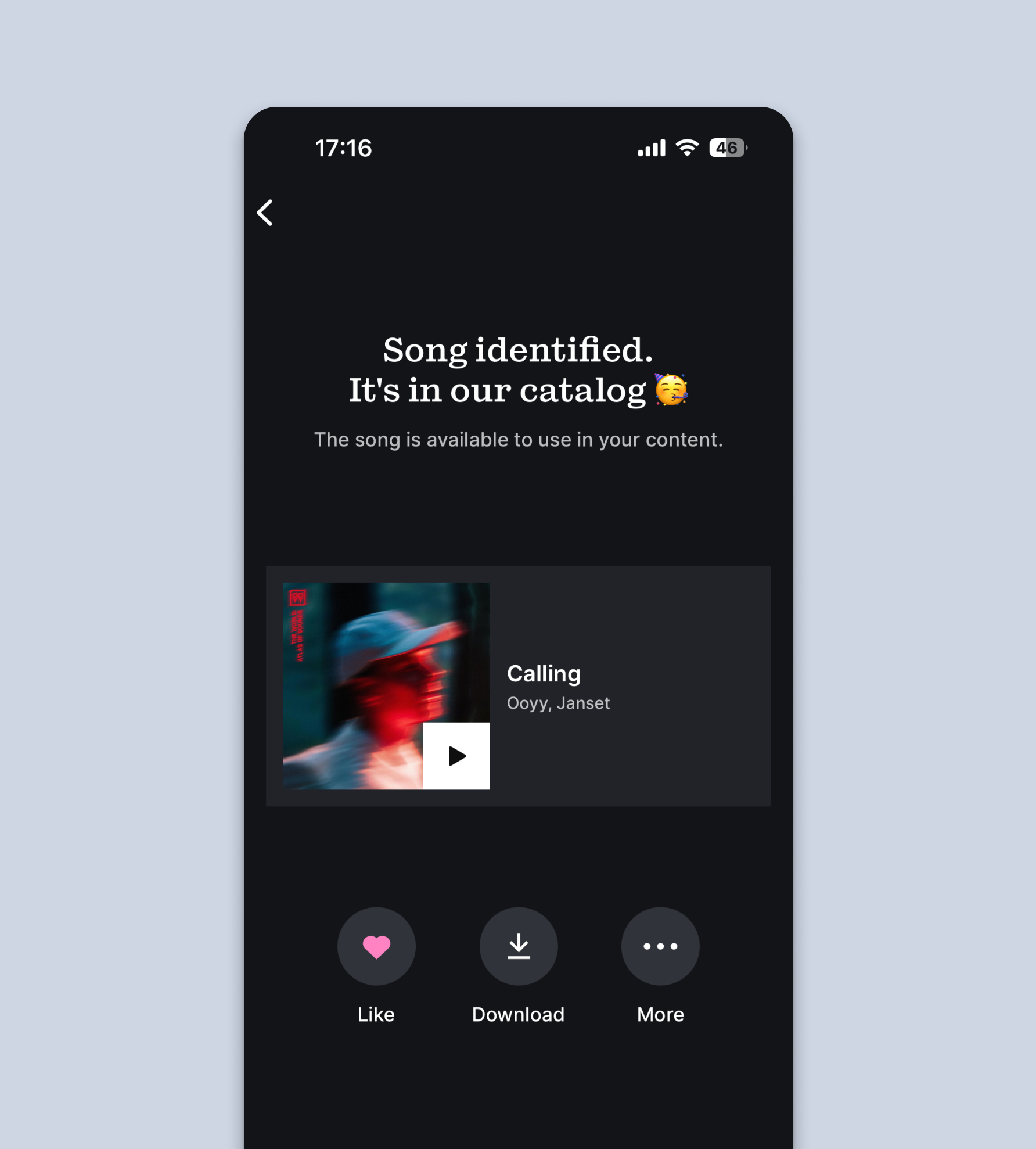
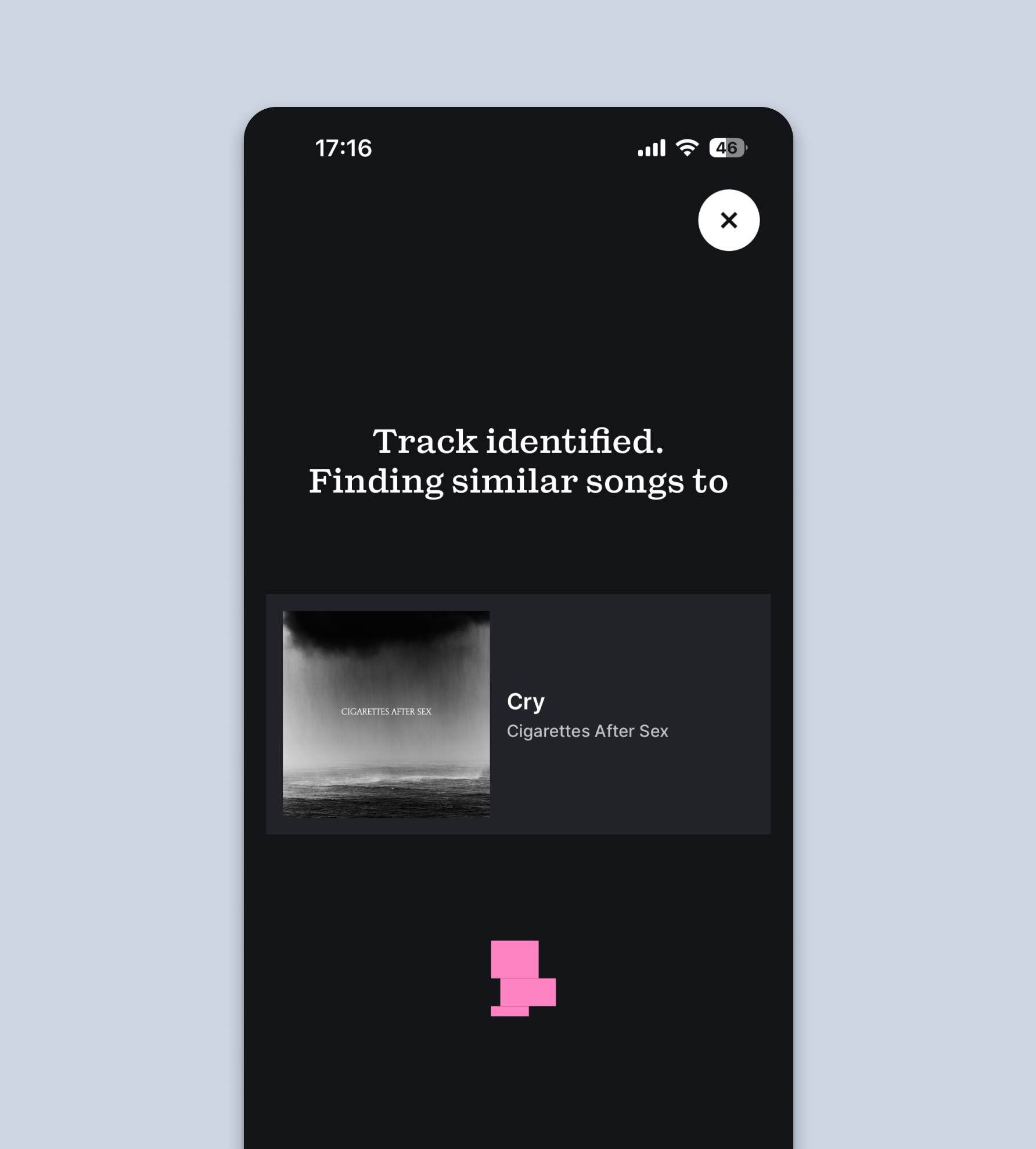
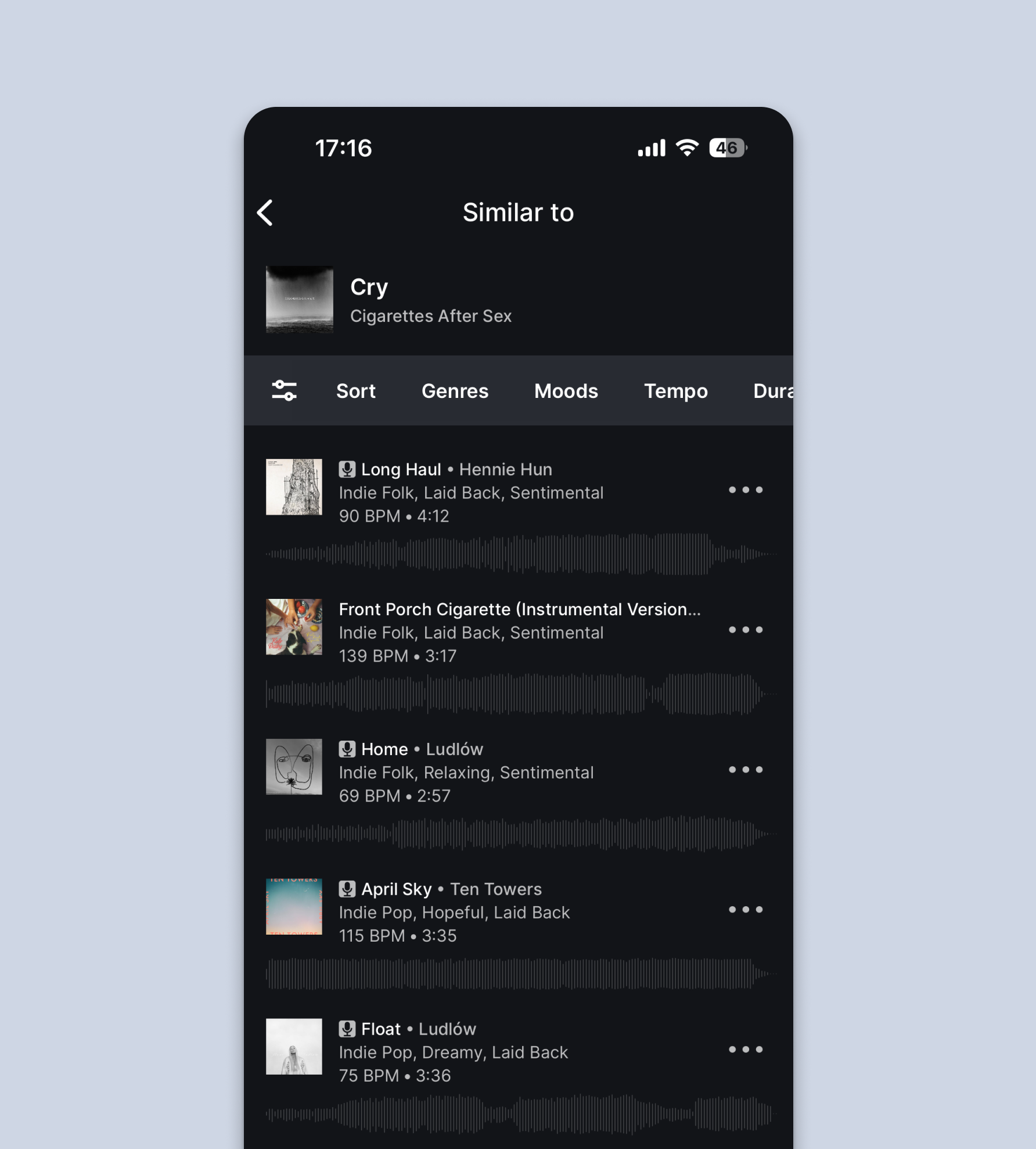
Everyone knows Shazam. Search by Shazam takes that idea further: not just identifying a song, but finding one creators can actually use, licensed and in our catalogue, or something similar if it's not. A clear mobile feature, something the web product can't do: catching a track the moment you hear it, wherever you are. I designed it end-to-end with engineering and research, shipping quickly to learn from real use.
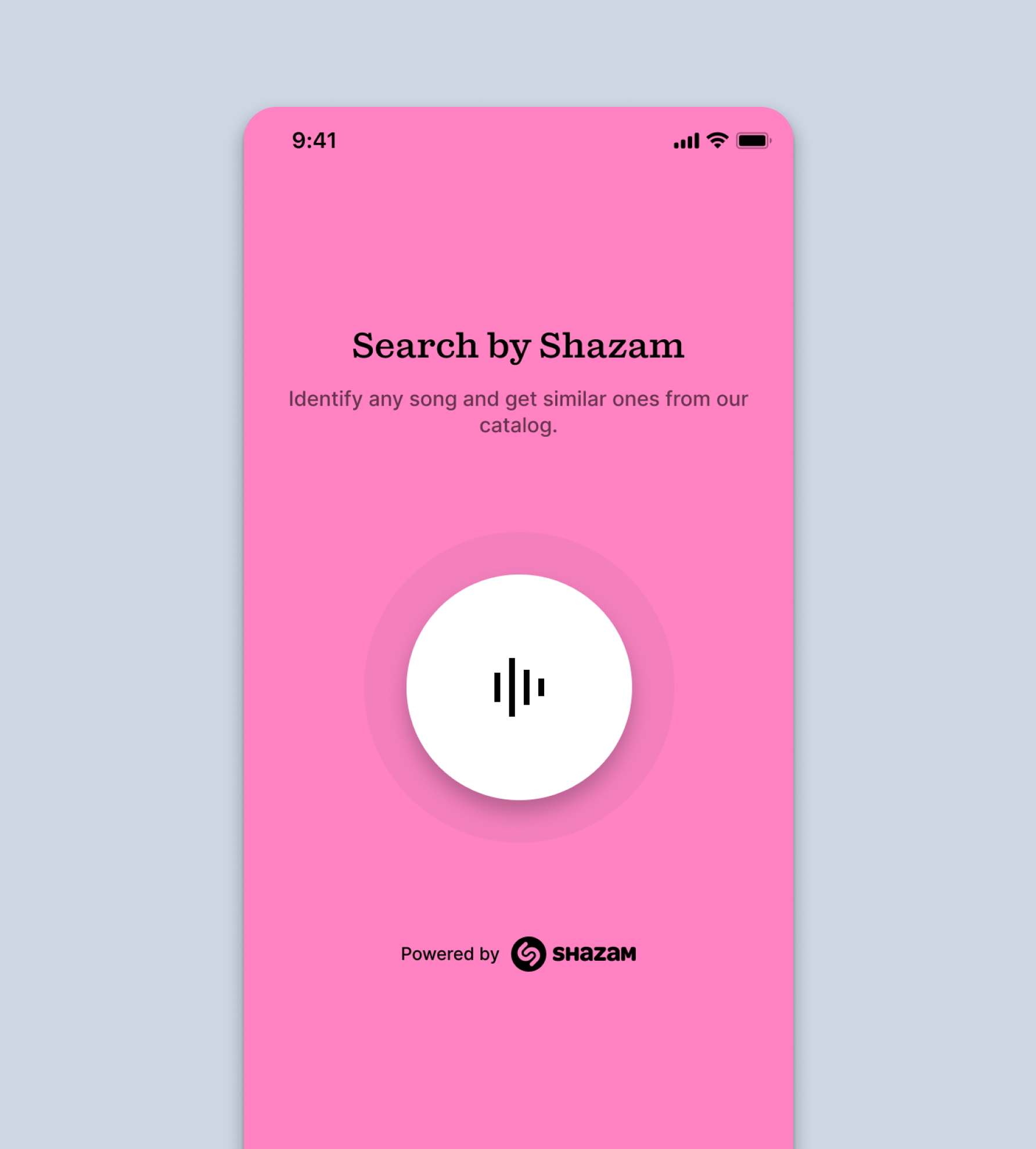
Search by Shazam launched to positive early feedback, and the strategy set the priorities for what the app team took on next. I left before the longer-term results came in, but the feature is still in the app today.
The biggest learning was weighing business needs and stakeholders alongside the user experience. As a designer that was new territory. We had spent a long time going in circles about what the app was even for, and once everyone was aligned we could finally leave that discussion behind.